
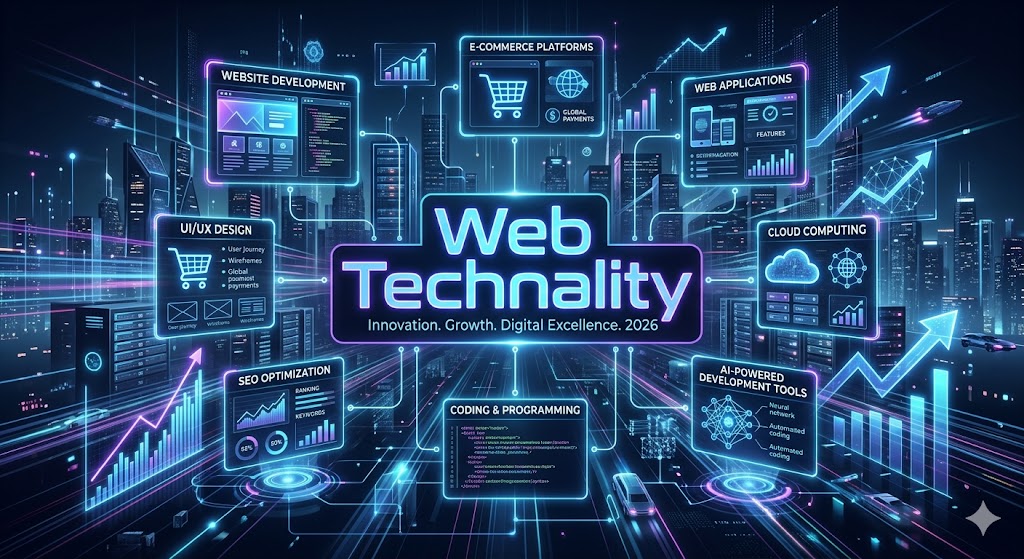
In the modern digital world, the success of any business is strongly connected to its online presence. Customers no longer rely only on physical stores or word-of-mouth recommendations. Instead, they search online, compare multiple options, read reviews, and evaluate websites before making any decision. This shift has made a company’s website one of its most important business assets.
In this competitive environment, a web development agency plays a critical role. It is not just a service provider that builds websites; it is a long-term digital partner that helps businesses grow, scale, and succeed online.
A modern web development agency combines creativity, technical expertise, strategic planning, and marketing understanding to create websites that are not only visually appealing but also performance-driven. These agencies build platforms that generate leads, improve brand credibility, and support long-term business growth.
As we enter 2026, the demand for advanced, fast, secure, and user-friendly websites has reached new heights. Businesses are no longer satisfied with basic websites. They need smart, scalable, and conversion-focused digital solutions.
This article explores in depth what a web development agency is, why it is important, what services it offers, how it benefits businesses, and how it is shaping the future of digital transformation.
What is a Web Development Agency? A Complete Overview
A web development agency is a professional organization that specializes in building, designing, maintaining, and optimizing websites and web applications for businesses and individuals.
Unlike freelancers or small internal teams, a web development agency consists of a complete team of professionals who work together to deliver high-quality digital solutions. These professionals include developers, designers, testers, project managers, SEO specialists, and strategists.
Each team member plays a specific role in ensuring that the final product is functional, visually appealing, scalable, and optimized for performance.
A web development agency does not simply create websites. Instead, it builds complete digital ecosystems that help businesses achieve their goals such as increasing sales, generating leads, improving customer engagement, and strengthening brand identity.
In many cases, agencies also act as consultants, guiding businesses on digital strategy, technology selection, and user experience improvements.
Why Web Development Agencies Are More Important Than Ever in 2026
The role of a web development agency has become more important than ever due to rapid technological changes and increasing online competition.
One of the biggest reasons is the complexity of modern websites. Today’s websites are not simple static pages. They include dynamic features, integrations with third-party tools, payment systems, APIs, dashboards, and sometimes even artificial intelligence-based functionalities. Managing all these components requires expert-level technical knowledge.
Another major factor is user expectation. Modern users expect websites to load instantly, be mobile-friendly, and provide smooth navigation. If a website fails to meet these expectations, users quickly leave and move to competitors. This makes performance optimization a critical requirement.
Competition is another key reason. Almost every industry is now digitally saturated. Businesses in e-commerce, healthcare, education, real estate, and technology are all competing for online attention. A professionally developed website helps businesses stand out in this crowded space.
Security is also a major concern. Cyber threats, data breaches, and hacking attempts are becoming more advanced. A web development agency ensures strong security measures, including encryption, secure coding practices, and regular updates.
Lastly, scalability is essential for growing businesses. A website must be able to handle increasing traffic, new features, and business expansion without breaking or slowing down.
Core Services Offered by a Web Development Agency
A web development agency provides a wide range of services that go beyond basic website creation.
Custom Website Development
Custom development is one of the most important services. It involves building websites from scratch based on a business’s specific needs, goals, and branding.
This ensures uniqueness, flexibility, and better performance compared to template-based websites. Custom websites allow businesses to implement features that directly support their operations and marketing goals.
E-commerce Development
E-commerce development is one of the fastest-growing services in the digital world. Agencies build online stores with secure payment systems, product management tools, shopping carts, and user-friendly checkout processes.
A well-developed e-commerce website focuses heavily on increasing conversions and reducing friction in the buying process.
UI and UX Design
User experience is one of the most important factors in website success. A good design is not just about appearance but also about usability.
Agencies focus on creating intuitive layouts, clear navigation, attractive visuals, and smooth interactions. Good UX design helps increase engagement and reduce bounce rates.
Front-End Development
Front-end development deals with the visual part of the website that users interact with. It includes designing responsive layouts, animations, and interactive elements using technologies like HTML, CSS, JavaScript, React, and Vue.
Back-End Development
Back-end development powers the functionality behind the website. It includes server management, database handling, authentication systems, and application logic.
Technologies like Node.js, Python, PHP, and .NET are commonly used for back-end development.
Web Application Development
Web applications are more advanced than traditional websites. They include SaaS platforms, dashboards, CRM systems, and enterprise tools.
These systems require complex architecture, scalability, and strong performance optimization.
CMS Development
Content management systems allow businesses to update their websites easily without technical knowledge. Agencies often use platforms like WordPress or build custom CMS solutions.
SEO and Performance Optimization
A website is only effective if it can be found on search engines. Agencies integrate SEO practices directly into development.
This includes optimizing speed, mobile responsiveness, site structure, metadata, and code quality.
How a Web Development Agency Helps Business Growth
A web development agency contributes significantly to business growth in multiple ways.
One of the most important contributions is lead generation. A well-structured website attracts visitors and converts them into customers through optimized design and clear calls to action.
Agencies also improve brand credibility. A professionally designed website creates trust among users and improves brand perception.
Another major benefit is increased user engagement. Interactive features, fast loading speeds, and smooth navigation encourage users to stay longer on a website.
Global reach is another advantage. With proper optimization, businesses can attract international customers and expand into new markets.
Agencies also improve business efficiency by integrating automation tools like chatbots, CRM systems, and analytics dashboards.
Strategic Importance of Web Development in Modern Business
Web development is not just a technical processit is a strategic business function.
A web development agency works closely with businesses to understand their goals, target audience, and competition. Based on this analysis, they create digital solutions that align with long-term business strategies.
For example, a startup may require a simple website focused on brand awareness, while a large enterprise may need a complex system with multiple integrations and advanced functionalities.
This strategic approach ensures that websites are not just functional but also aligned with business growth objectives.
Challenges Businesses Face Without a Web Development Agency
Businesses that do not work with a professional web development agency often face multiple challenges.
One of the biggest issues is poor website performance. Slow loading times, broken features, and poor design lead to user frustration.
Another challenge is lack of scalability. Many websites cannot handle increased traffic or additional features, forcing businesses to rebuild their platform.
Security risks are also common. Without proper protection, websites become vulnerable to cyberattacks.
SEO challenges are another issue. Many websites fail to rank on search engines due to poor structure and optimization.
These problems highlight the importance of professional web development services.
Technologies Used by Modern Web Development Agencies
Modern agencies use advanced technologies to build powerful digital solutions.
Front-end frameworks like React, Angular, and Vue.js are widely used for creating interactive user interfaces. Back-end technologies such as Node.js, Laravel, and Python are used for server-side development.
Databases like MySQL and MongoDB manage large volumes of data efficiently. Cloud platforms such as AWS and Google Cloud ensure scalability and reliability.
APIs and third-party integrations connect websites with external services like payment gateways and analytics tools.
The Role of AI in Web Development Agencies
Artificial intelligence is transforming the web development industry.
AI is used for automation, personalized user experiences, chatbot systems, and data analysis. It also helps improve development speed and reduce manual workload.
Some agencies use AI for design suggestions, content optimization, and predictive analytics, making websites smarter and more efficient.
Future of Web Development Agencies
The future of web development agencies is focused on full digital transformation.
Agencies will move beyond traditional website building and focus on creating complete digital ecosystems that include automation, AI, analytics, and marketing integration.
Emerging technologies such as augmented reality, virtual reality, and voice search will also become part of web development.
Businesses will increasingly rely on agencies not just for development but for complete digital strategy and innovation.
The Evolving Role of Web Development Agencies in the Digital Economy
The digital economy has transformed dramatically over the past decade, and businesses are now operating in an environment where online presence directly influences revenue, reputation, and customer trust. In this environment, a web development agency is no longer just a technical service provider-it has become a strategic growth partner that contributes to every stage of a company’s digital journey.
In earlier years, businesses often treated websites as static informational pages. A simple design, a few service descriptions, and basic contact information were considered enough. However, in today’s competitive landscape, that approach is no longer effective. Users expect interactive, fast, and highly personalized experiences. Search engines also prioritize performance, mobile optimization, and user engagement. This shift has completely redefined the responsibilities of a web development agency.
Modern agencies are now deeply involved in understanding business models before writing a single line of code. They analyze target audiences, study competitors, evaluate market gaps, and identify conversion opportunities. This strategic foundation ensures that every website they build is aligned with real business goals rather than just aesthetic preferences.
For example, an e-commerce business does not just need an online store. It needs a conversion-optimized system that reduces cart abandonment, encourages repeat purchases, and builds customer loyalty. A professional web development agency integrates these business objectives directly into the design and development process.
How Agencies Bridge the Gap Between Design and Business Strategy
One of the most important contributions of a web development agency is its ability to connect creative design with business strategy. Many businesses struggle because their websites either look good but fail to perform, or perform technically well but fail to engage users. Agencies solve this problem by balancing both aspects.
Design teams within agencies focus on user psychology, color theory, layout structure, and visual hierarchy. These elements ensure that users can navigate websites intuitively and find what they are looking for without confusion. At the same time, development teams ensure that the website is fast, responsive, and technically stable across all devices and browsers.
Beyond design and development, agencies also consider business funnels. A well-structured website is designed to guide users from awareness to action. This may include visiting a landing page, exploring services, signing up for newsletters, or making a purchase. Every step is strategically planned to maximize conversions.
This integration of design, technology, and business logic is what makes a web development agency so valuable in today’s digital ecosystem.
Importance of User Experience in Modern Web Development
User experience, often referred to as UX, has become one of the most important factors in determining a website’s success. A web development agency places significant emphasis on creating seamless and enjoyable user journeys.
A good user experience means that visitors can easily navigate a website, find relevant information quickly, and complete desired actions without friction. If a website is confusing or difficult to use, users are likely to leave within seconds.
Agencies conduct extensive research before designing user experiences. This includes understanding user behavior patterns, analyzing heatmaps, studying click-through rates, and testing different design variations. Based on this data, they create interfaces that are intuitive and user-friendly.
Mobile responsiveness is another critical aspect of UX. With the majority of internet users accessing websites through smartphones, agencies ensure that designs adapt perfectly to different screen sizes. A responsive design not only improves usability but also positively impacts search engine rankings.
Accessibility is also becoming increasingly important. A modern web development agency ensures that websites are usable for people with disabilities by following accessibility standards such as proper contrast ratios, keyboard navigation support, and screen reader compatibility.
All of these factors combined create a smooth and engaging user experience that encourages users to stay longer and interact more with the website.
The Role of Performance Optimization in Website Success
Website performance is another area where a web development agency plays a crucial role. In the digital world, speed is everything. Even a delay of a few seconds in page loading can lead to significant user drop-off.
Agencies focus heavily on optimizing website performance during the development process. This includes minimizing code size, optimizing images, using caching techniques, and implementing content delivery networks. These practices ensure that websites load quickly regardless of user location or device.
Performance optimization is not just about speed-it also impacts search engine rankings. Search engines like Google consider page speed as a ranking factor, which means faster websites are more likely to appear higher in search results.
In addition to speed, agencies also focus on stability and reliability. Websites must remain functional even during high traffic periods. This is especially important for e-commerce platforms, news websites, and SaaS applications where downtime can result in financial losses.
A professional web development agency ensures that websites are tested under different conditions to guarantee consistent performance.
Security as a Core Responsibility of Web Development Agencies
As digital threats continue to evolve, cybersecurity has become a major concern for businesses. A web development agency plays a critical role in protecting websites from vulnerabilities, attacks, and data breaches.
Security begins at the development stage. Agencies follow secure coding practices to prevent common vulnerabilities such as SQL injection, cross-site scripting, and unauthorized access. They also implement SSL encryption to secure data transmission between users and servers.
Regular updates and maintenance are another important aspect of website security. Outdated plugins, frameworks, or systems can create entry points for attackers. Agencies ensure that all components of a website remain updated and secure.
For businesses that handle sensitive customer data, such as payment information or personal details, security becomes even more critical. Agencies often integrate advanced security systems, firewalls, and monitoring tools to detect and prevent suspicious activities.
This proactive approach to security helps businesses build trust with their users while protecting their digital assets.
Scalability and Long-Term Growth Support
One of the key advantages of working with a web development agency is scalability. Businesses are not static—they grow, evolve, and expand into new markets. A scalable website ensures that this growth is supported without technical limitations.
Agencies design websites with future expansion in mind. This means using flexible architectures, modular coding structures, and scalable hosting solutions. As a result, businesses can easily add new features, pages, or services without rebuilding their entire platform.
Scalability is especially important for startups and growing companies. A website that works well for 1,000 users may struggle with 100,000 users if it is not properly designed. Agencies ensure that systems are built to handle increasing traffic and data loads efficiently.
In addition to technical scalability, agencies also provide strategic scalability. This includes advising businesses on how to expand their digital presence, integrate new technologies, and adapt to changing market trends.
Digital Transformation and the Future of Business
A web development agency is now a key driver of digital transformation. Businesses across industries are shifting from traditional operations to fully digital ecosystems. This transformation includes automation, online customer engagement, data-driven decision-making, and cloud-based operations.
Agencies help businesses navigate this transformation by building the necessary digital infrastructure. This may include customer portals, internal dashboards, mobile-responsive platforms, and integrated business systems.
As technology continues to evolve, the role of web development agencies will expand further. They will not only build websites but also create intelligent digital ecosystems powered by artificial intelligence, machine learning, and automation.
Businesses that embrace this transformation early will have a significant competitive advantage in the coming years.
User Engagement and Conversion Optimization
Another critical responsibility of a web development agency is improving user engagement and conversions. A website is not just meant to attract visitors—it is meant to convert them into customers.
Agencies use various techniques to improve conversion rates. These include strategic placement of call-to-action buttons, optimized landing pages, persuasive content structure, and simplified navigation flows.
They also analyze user behavior to identify drop-off points and improve weak areas of the website. This continuous optimization process ensures that websites perform better over time.
Engagement is also improved through interactive elements such as animations, chat support systems, personalized recommendations, and dynamic content. These features help create a more engaging and immersive experience for users.
Conclusion
A web development agency is a vital partner in today’s digital economy. It provides technical expertise, creative solutions, and strategic direction needed for business success.
In 2026, having a website is not enough. Businesses need fast, secure, scalable, and SEO-optimized platforms that deliver real results. A professional web development agency ensures all these requirements are met effectively.
Choosing the right agency is not just a technical decision—it is a long-term investment in digital growth, brand authority, and business success.