
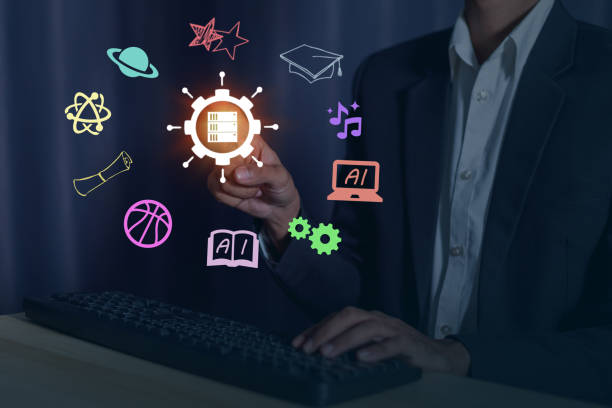
AI-powered tools are rapidly transforming how we perform tasks, manage projects, and communicate in professional environments. Businesses leverage these technologies to improve efficiency, reduce errors, and optimize workflows across departments.
Automation software powered by AI handles repetitive tasks, freeing employees to focus on strategic and creative responsibilities. Tools such as chatbots, scheduling assistants, and document analyzers streamline daily operations efficiently.
AI also enables predictive analytics in workplaces, helping organizations anticipate market trends, customer behavior, and resource needs. Data-driven insights guide smarter decisions, reducing risks and improving profitability.
Collaboration platforms enhanced with AI provide real-time language translation, task assignment, and project tracking, improving team productivity. Employees can coordinate seamlessly, regardless of location or time zone, boosting operational effectiveness.
AI in Learning and Education
AI tools are redefining learning experiences through personalization and adaptive content. Platforms assess students’ strengths, weaknesses, and preferences, creating customized learning paths that improve understanding and retention.
Virtual tutors and AI chatbots assist learners with instant answers, guidance, and explanations. These technologies provide one-on-one support, increasing engagement and helping students master complex concepts independently.
AI-powered content generation tools assist educators in creating interactive lessons, quizzes, and study materials efficiently. Teachers can focus on fostering creativity, mentorship, and critical thinking rather than administrative tasks.
Learning analytics powered by AI help schools identify knowledge gaps, predict student outcomes, and provide timely interventions. This data-driven approach supports both instructors and learners in achieving academic success effectively.
Enhancing Creativity with AI Tools
AI tools are no longer limited to automation and analytics; they are empowering creativity in design, writing, music, and other artistic pursuits. Generative AI assists in producing ideas faster.
Designers use AI to generate mockups, graphics, and prototypes quickly, exploring multiple concepts without consuming excessive resources. This accelerates creativity and streamlines the production process across industries.
Writers benefit from AI-powered writing assistants that suggest ideas, improve grammar, and enhance style. These tools enable authors and content creators to focus on storytelling rather than mechanical tasks.
AI tools in music and video production help generate soundtracks, visual effects, and editing suggestions. Creators can experiment with diverse formats and techniques, pushing artistic boundaries while reducing time and effort.
Remote Work and AI Collaboration
AI-driven collaboration platforms enable remote teams to operate efficiently. Tools integrate task management, communication, and data analytics to ensure seamless workflow and accountability for distributed teams globally.
Intelligent virtual assistants schedule meetings, summarize discussions, and track deadlines, allowing employees to focus on high-value tasks. These tools reduce administrative overhead and support effective decision-making.
AI-powered video and transcription software converts conversations into actionable insights, making meetings more productive. Teams can revisit discussions, identify responsibilities, and track progress without relying on manual note-taking.
Language translation and real-time transcription tools powered by AI enable multinational teams to collaborate without barriers. Cross-cultural communication improves as employees understand and engage effortlessly across regions and time zones.
Challenges and Future of AI in Work and Learning
Despite benefits, AI adoption faces challenges, including data privacy, bias, and over-reliance. Organizations and educators must implement ethical practices to ensure responsible and fair usage of AI technologies.
Training and upskilling workers is crucial for maximizing AI potential. Employees need guidance to collaborate with AI effectively while maintaining critical thinking and human oversight in decision-making processes.
The future of AI promises smarter, more intuitive tools capable of predicting needs, providing personalized recommendations, and enhancing human creativity in work and learning environments globally.
As AI continues evolving, integration into daily routines will accelerate productivity and engagement. Responsible implementation, continuous learning, and collaboration will define the next era of AI-enhanced workplaces and educational systems.